
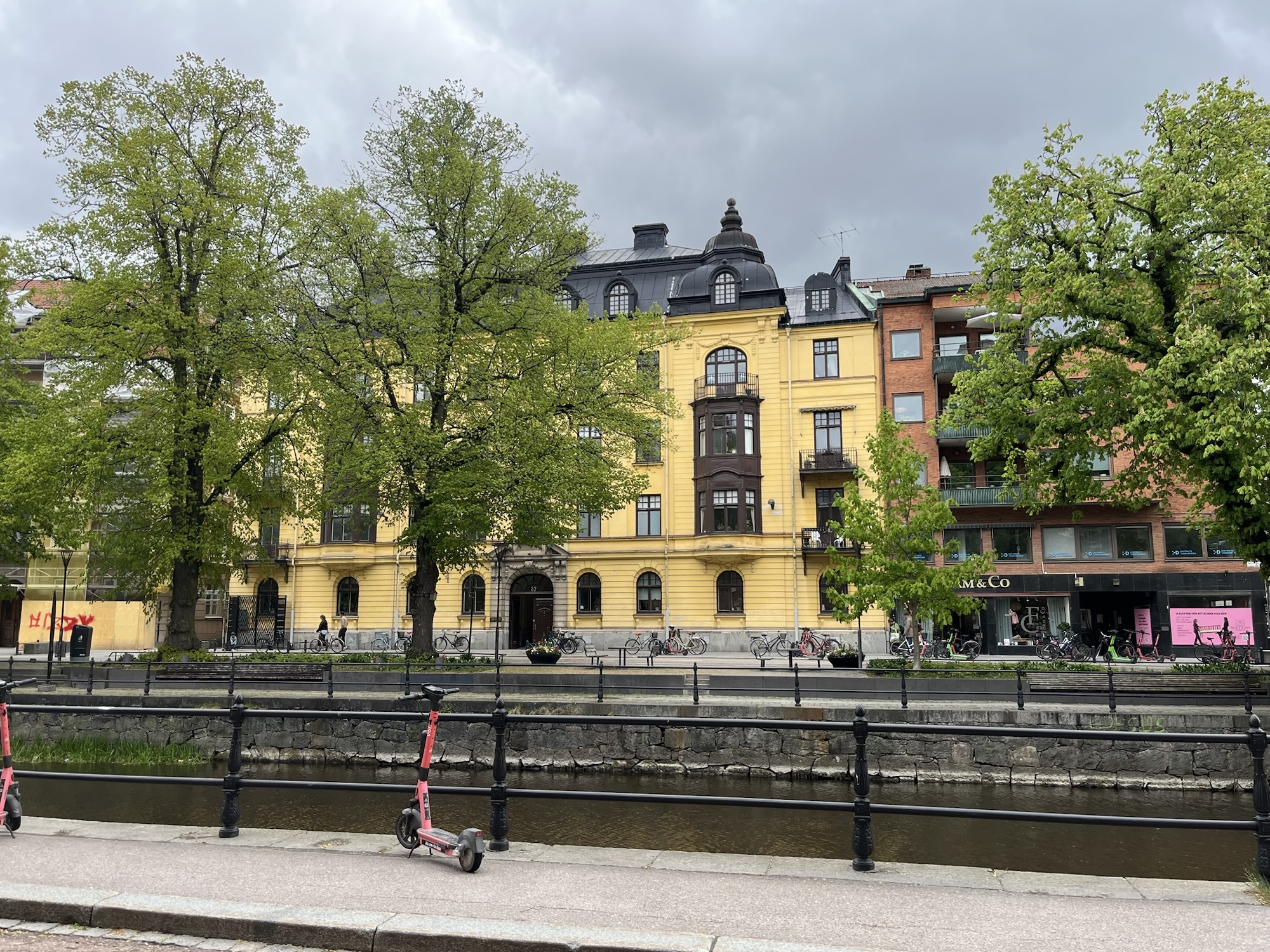
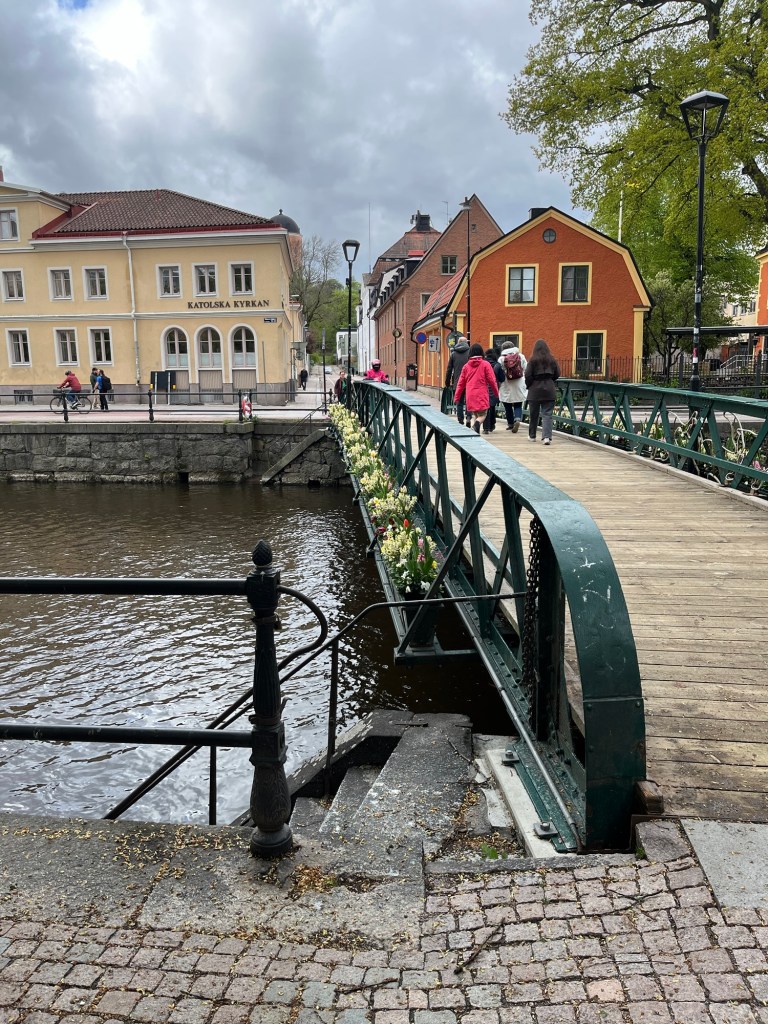
Thursday was a public holiday here in Sweden and many other countries in Europe, the day being Kristi Himmelsfärd or Ascension. We decided to jump on a train and head up to Uppsala, home to Sweden’s oldest university. The journey only takes 50 minutes, and cost SEK 40 (NZ$ 3.64) or on top of our regular monthly transport tickets (actually, SEK 30 for me at my age). The weather was very mixed with occasional sunny moments, a lot of cloud and a bitterly cold wind if you were in the wrong place. Anyway, we set off from the station to towards the cathedral, stopping to admire the flowers on this bridge.
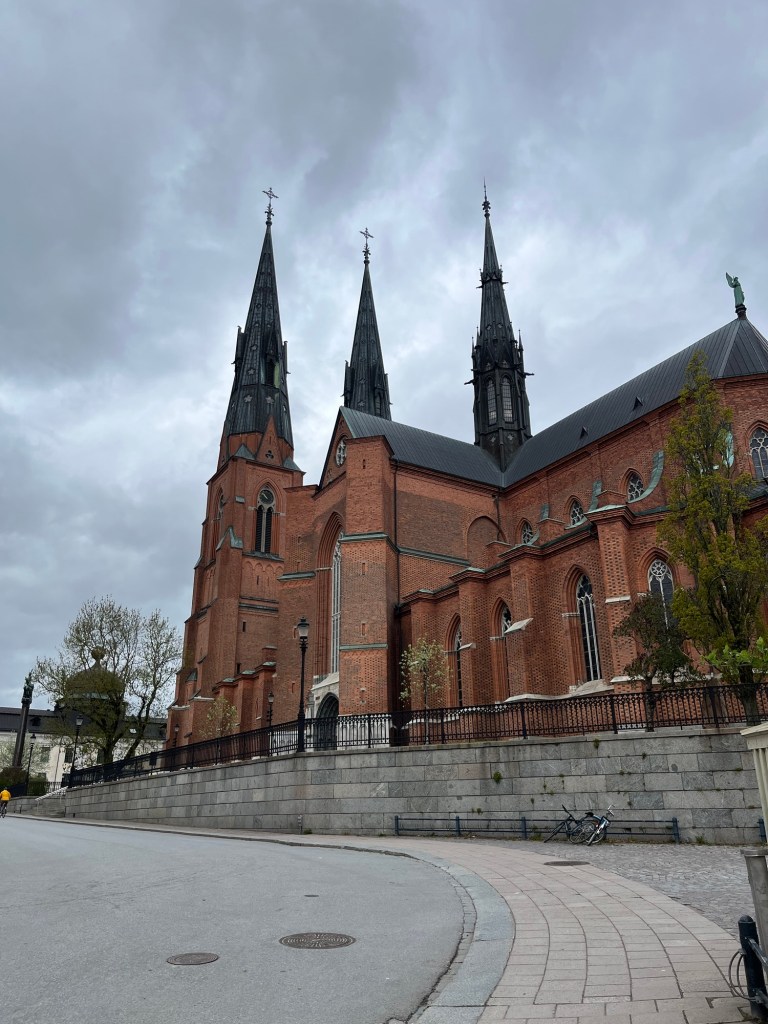
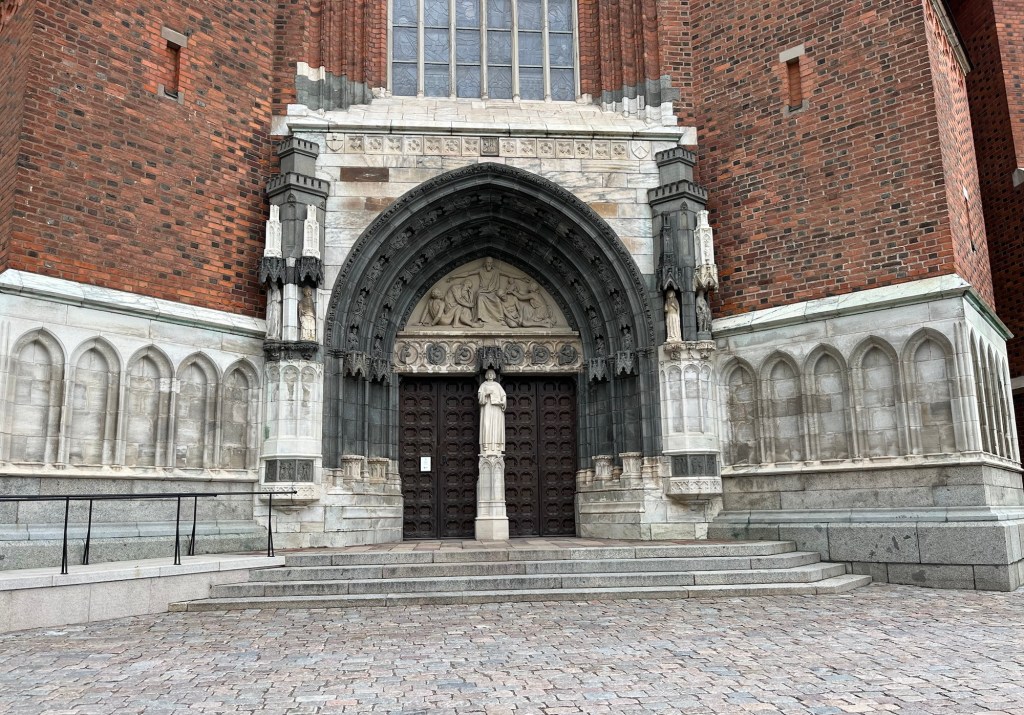
The cathedral dates from the latter half of the 1300s and is as tall as it is long at 118.7 metres, making it the tallest church in the Nordic nations. The cathedral of course has a long history of repairs, restoration and fire damage as you can imagine. We were unable to go in as the morning service was in progress.
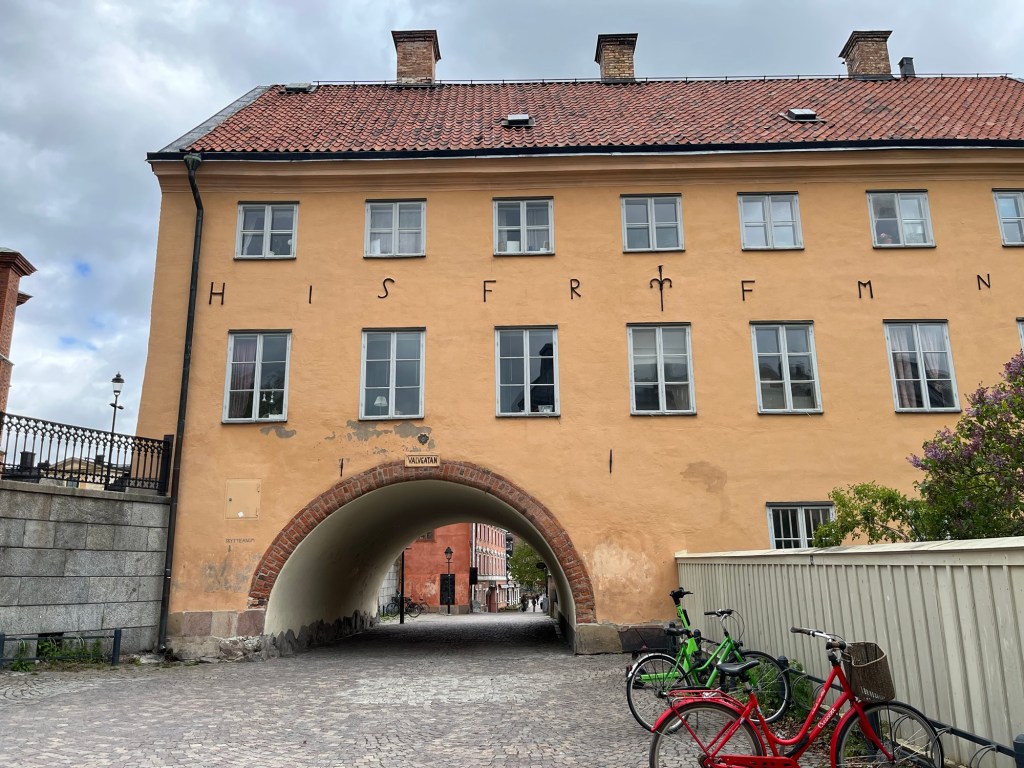
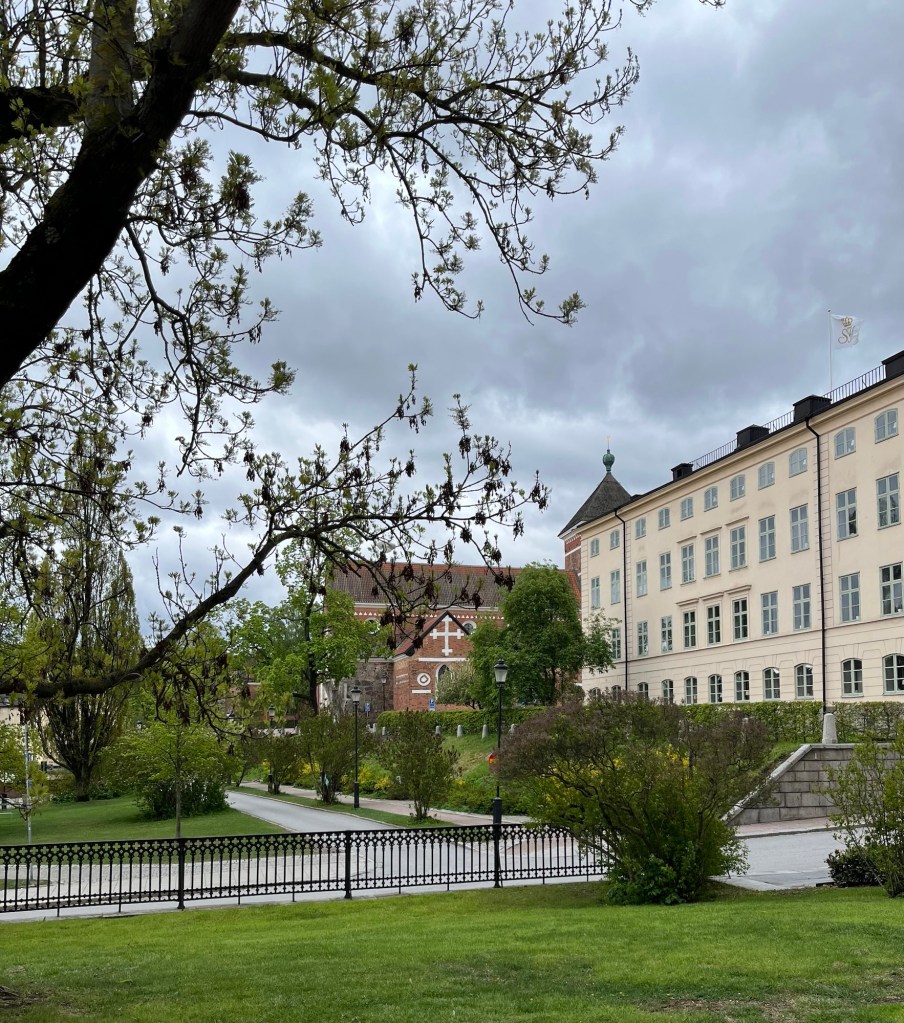
Next to the cathedral lies this Skytteanum. The building named after Johan Skytte, born in 1577, a former Chancellor of the university (amongst other things). I read that the letters on the facade are actually decorative anchor plates for reinforcing the building. The letters are H I S F R and F M N T G that stand for Herr Johan Skytte Friherre Riksråd and Fru Maria Nääf Till Grönsöö (Mr Johan Skytte, Baron, Councillor of the Realm, and Mrs Maria Nääf Till Grönsöö, who was Skytte’s wife). The building is actually a home for the professor of political science at the university. The Skytte Chair is considered the oldest professorship in the subject in the world. The picture below that is of the Catholic church with sits opposite the Lutheran Cathedral.
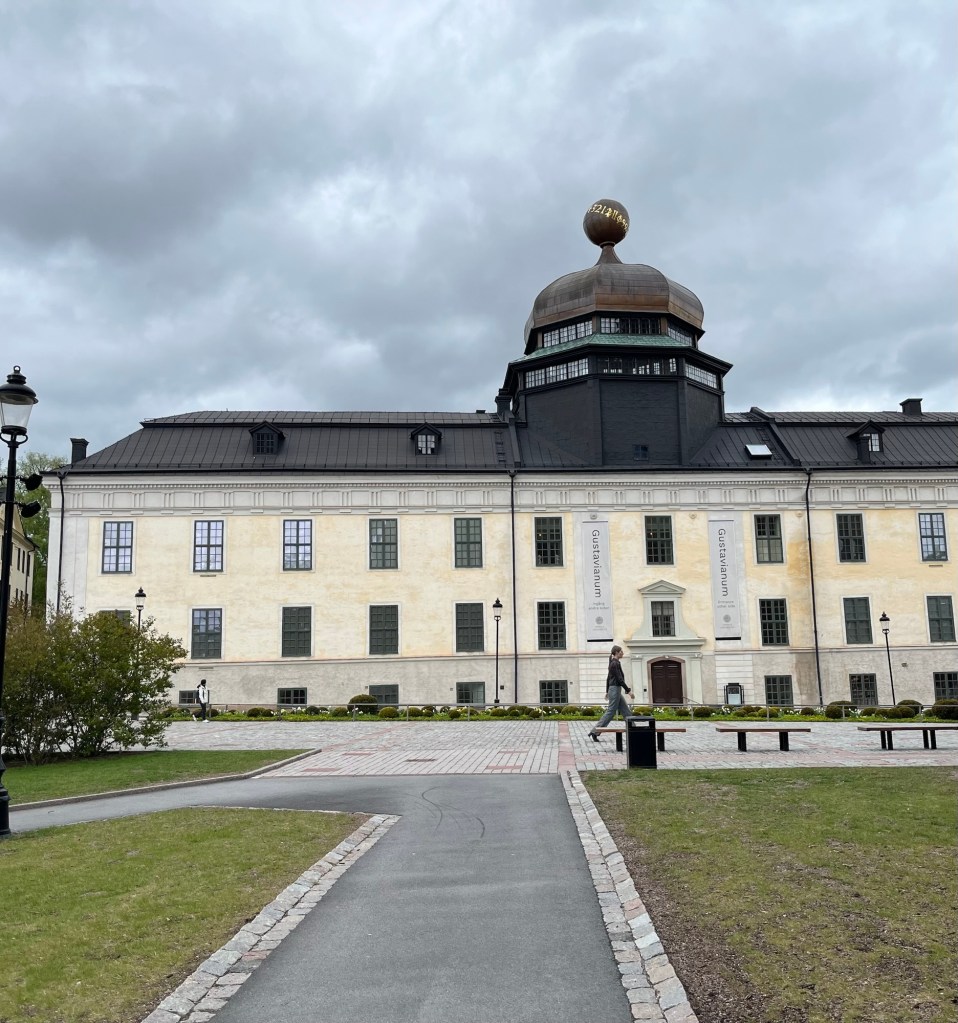
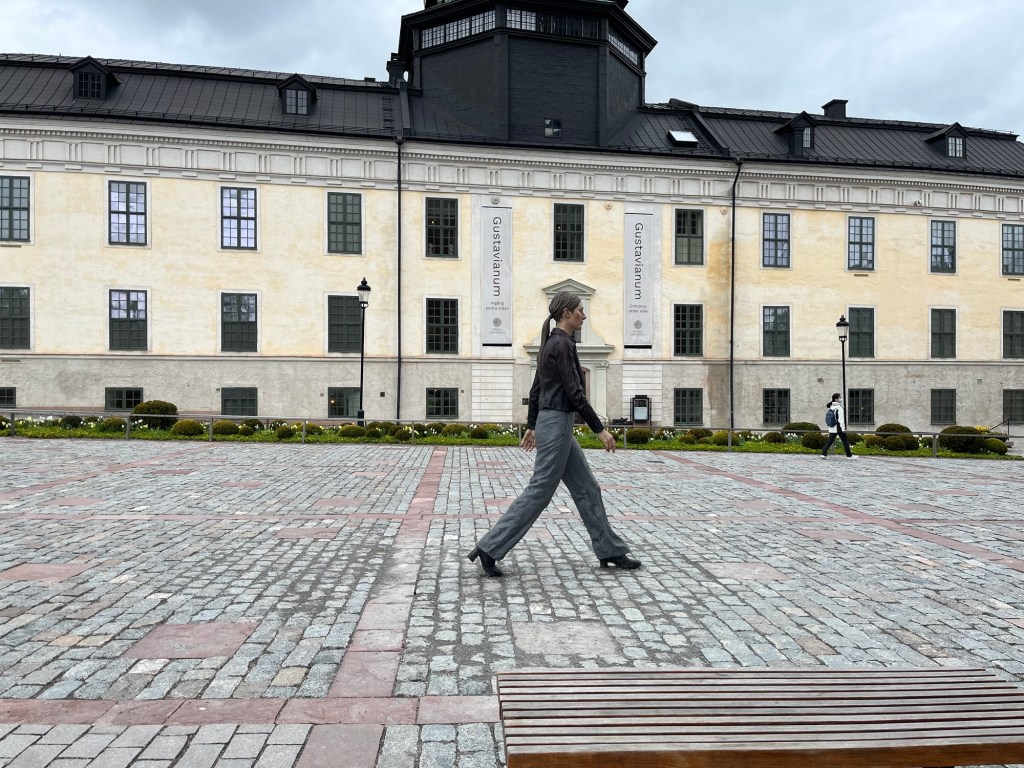
From there we headed over to Gustavianum, the Uppsala University Museum housed in the university’s oldest perserved building. Built in the 1620s it originally housed lecture halls, libraries, student housing and student kitchens. Now it is home to the university’s collections of archaeological and historical objects, art, coins and history of science. The woman striding out in front is in fact a statue, not someone walking along in the photo.
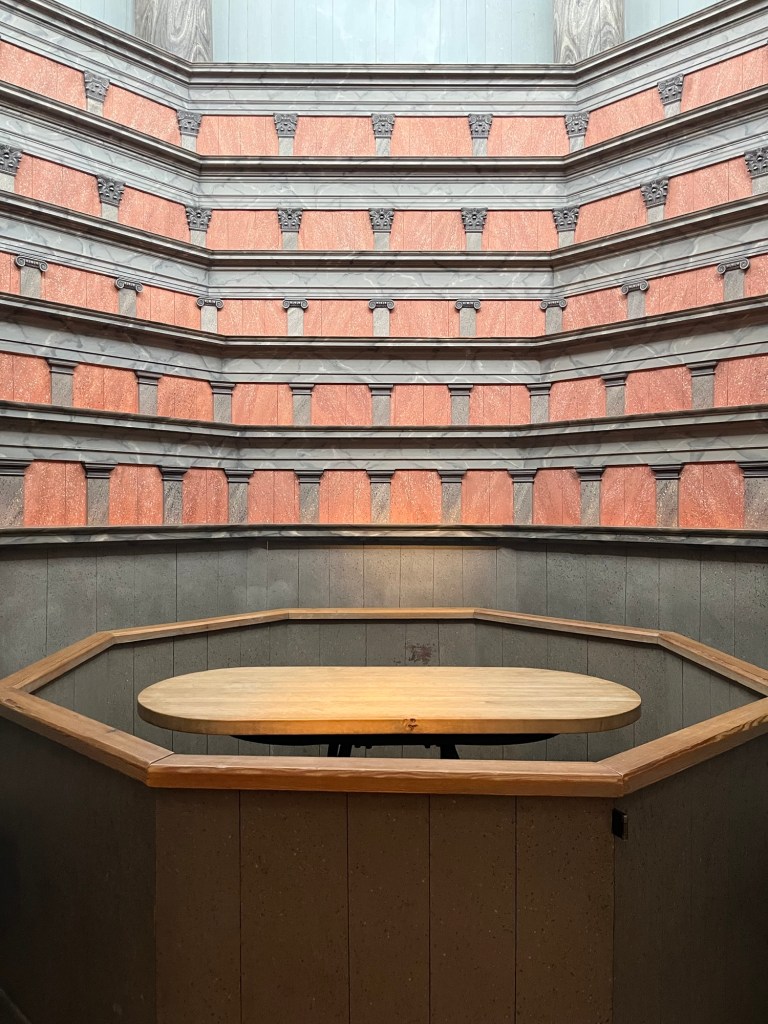
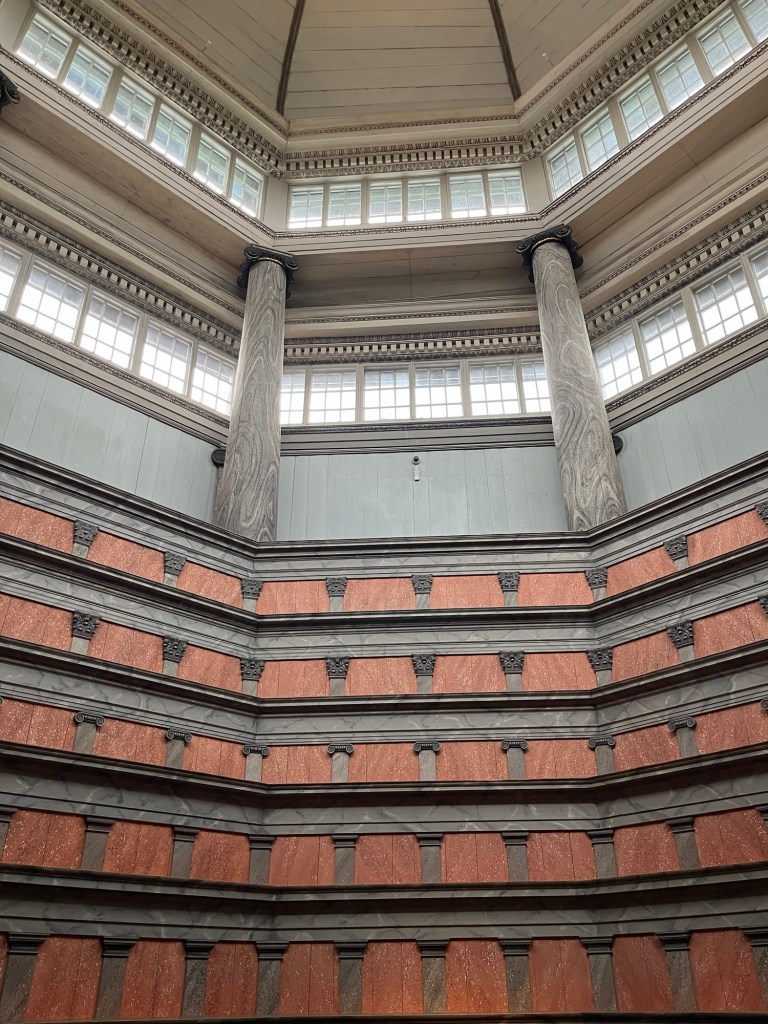
The Anatomical Theatre is a must visit part of the museum which dates back to the 1660s. The rows of seats can be seen below, and the whole lecture theatre sits under a domed cupola (my photograph of this was too bad to include). Some of the demonstrations were open to the public, who were then invited to attend the funeral of the person who was dissected. Hmmm…..
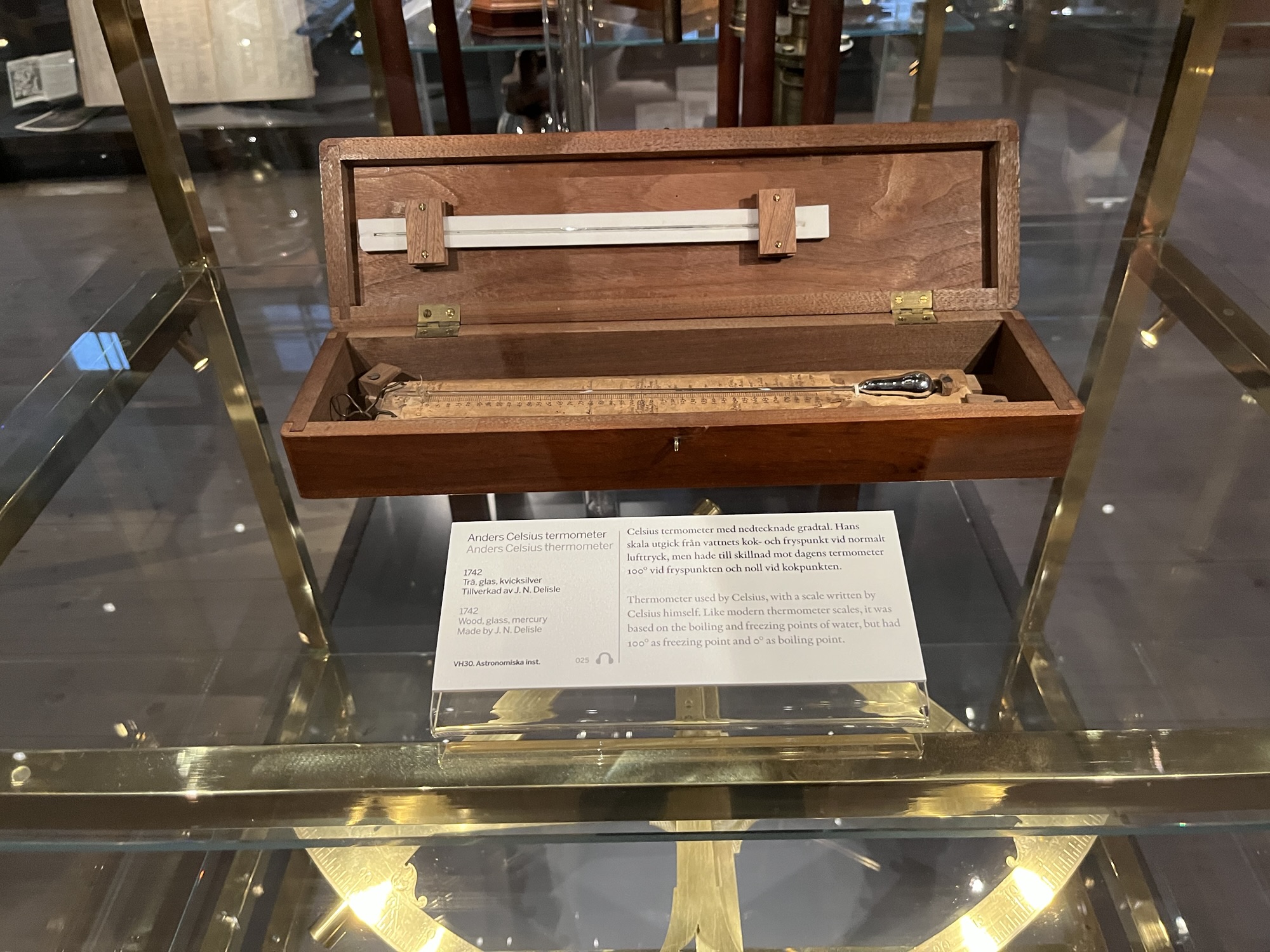
On the first floor, there is an exhibition about the history of Uppsala University from its foundation in 1477. This part of the museum explores the history of science with a wide range of scientific instruments, models, apparatus, and publications on display. I particularly enjoyed seeing the first Celsius thermometer, which actually went from 100C for freezing and 0C for boiling. Anders Celsius was a professor at Uppsala University from 1730 to 1744, and am sure would be delighted to know his system of measuring temperature is used all over the world today.
Uppsala University also has a huge art collection, and we enjoyed seeing a big collection of art works, including a striking picture by August Strindberg (who was also an artist as well as playwright and novelist). On the ground floor is an exhibition of items found from the burial grounds at Valsgärde near Uppsala. The graves are mainly from the Vendel Period, which preceded the Viking Age. The exhibition includes helmets (including one inlaid with garnets), weapons, decorated bridles, jewellery, and glass objects and was quite fascinating. Clearly many of the objects were owned by the wealthy.
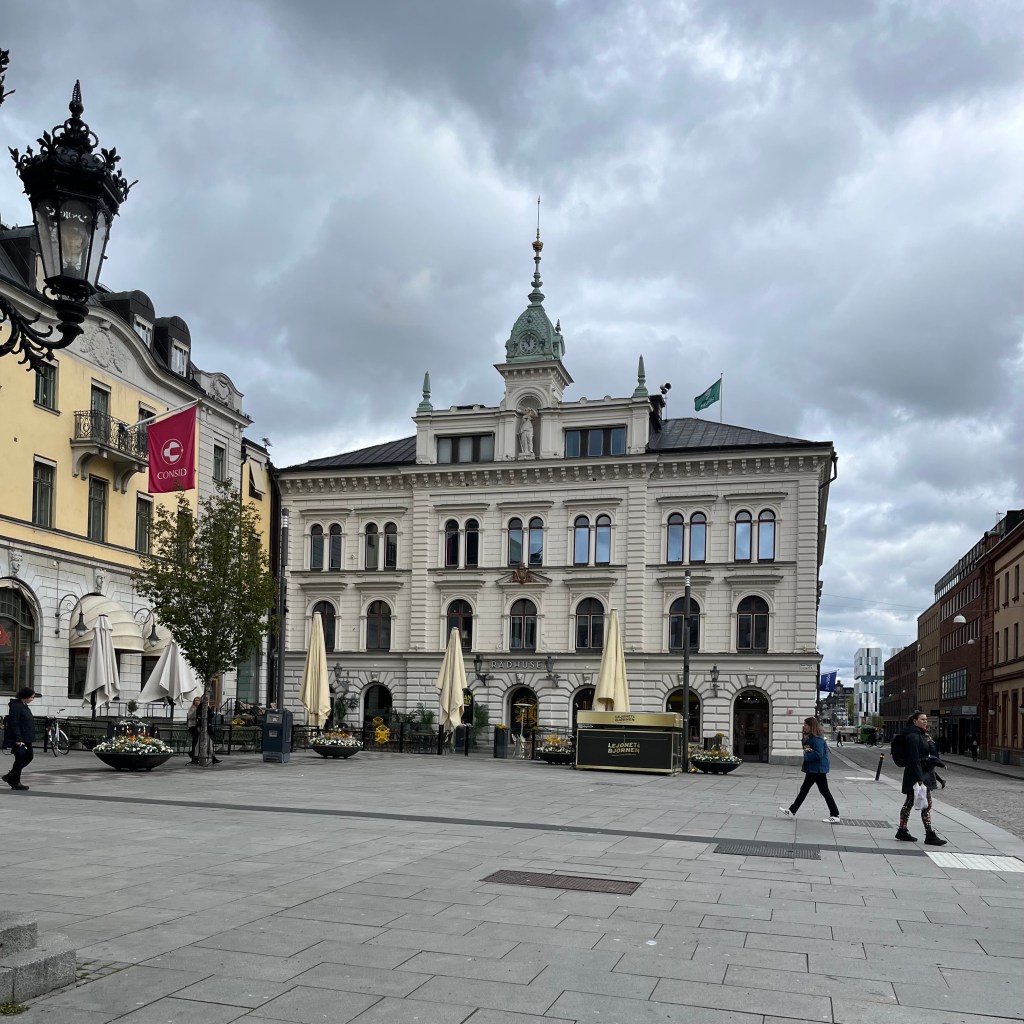
It was then time for lunch, and being a public holiday, we were a bit short on choices. Anyway, we ended up in Stora Torget, the square with the old town hall and a building that used to be a bank but I confess am not sure what it is now.
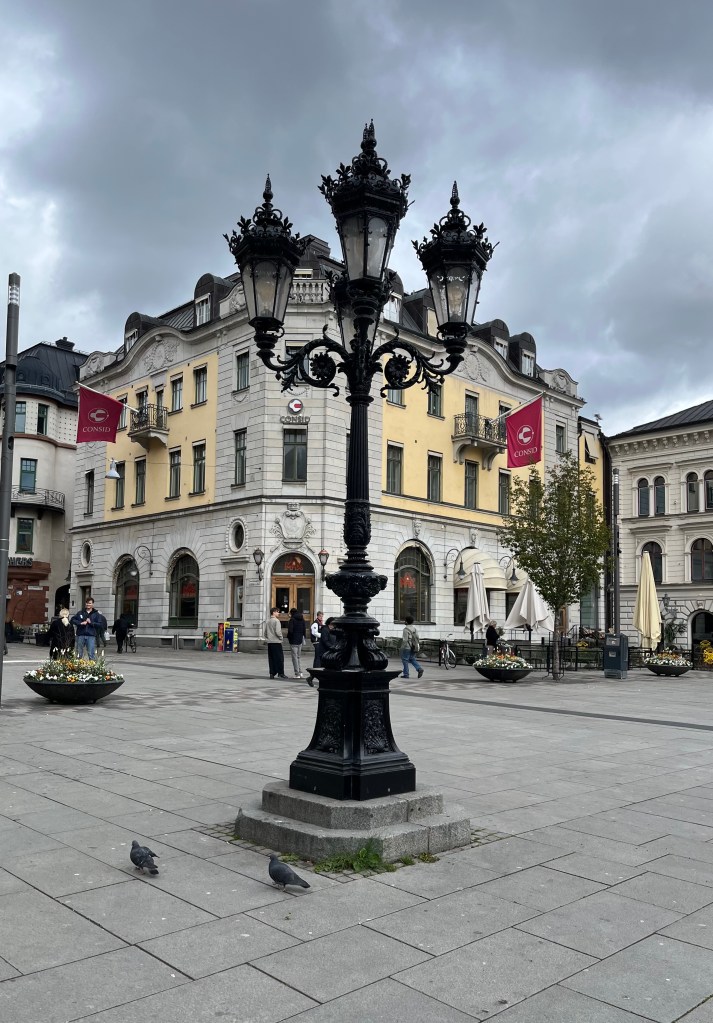
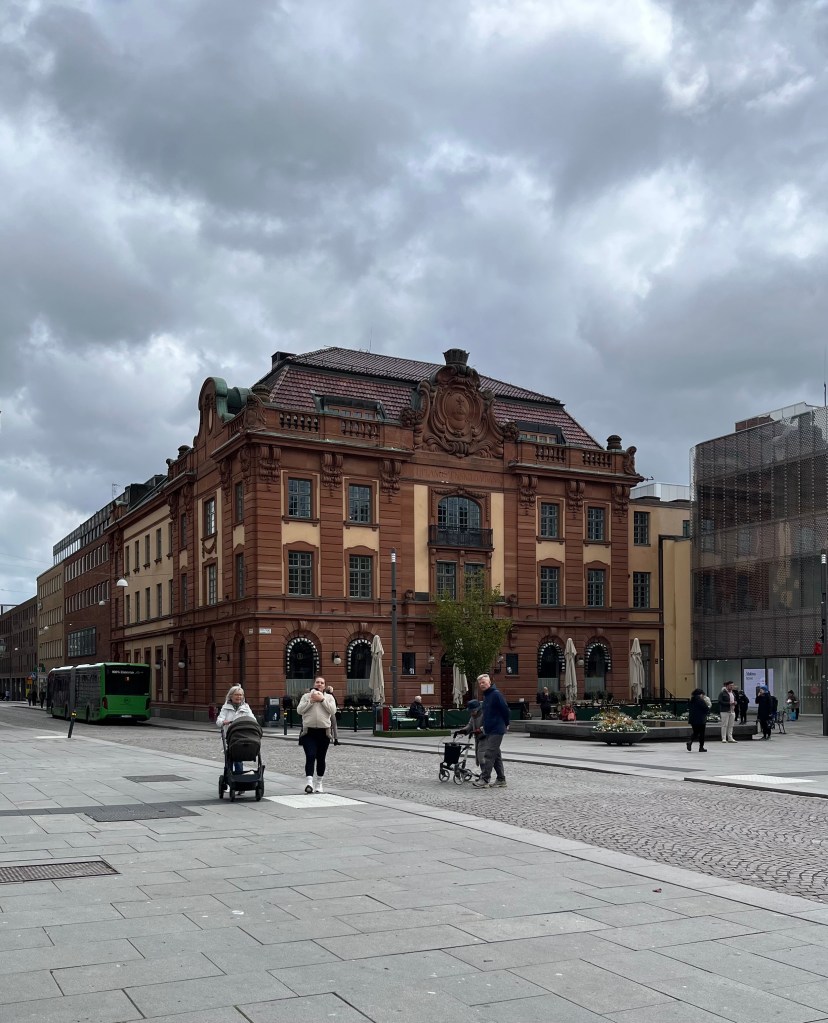
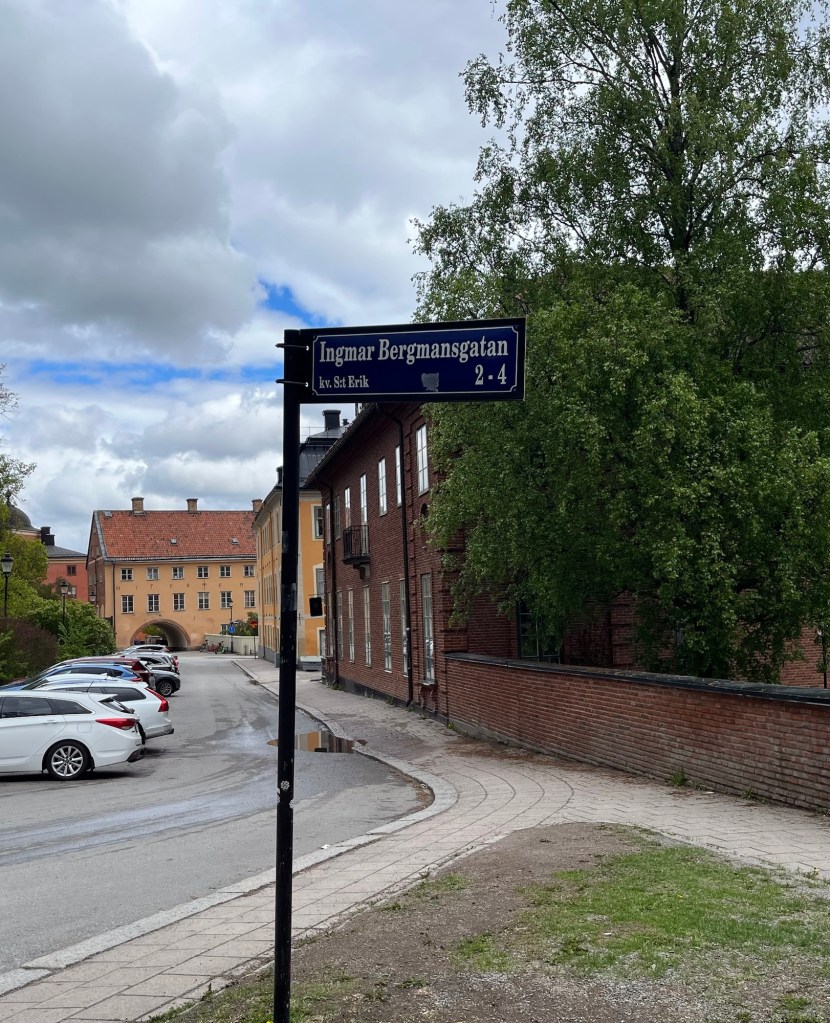
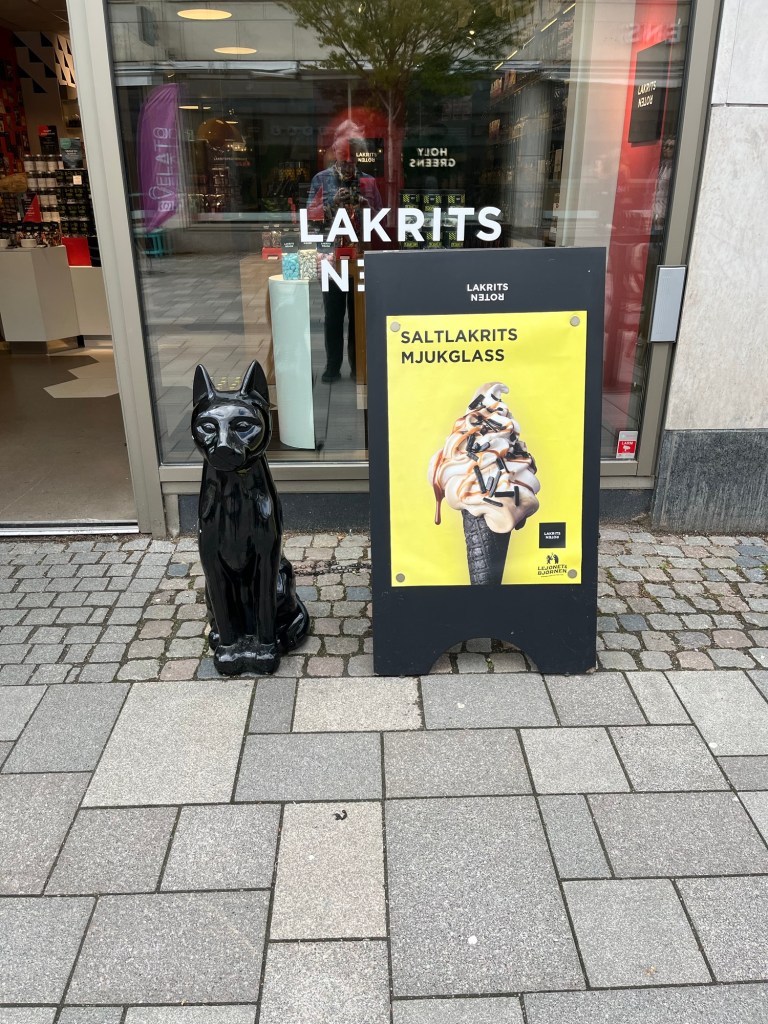
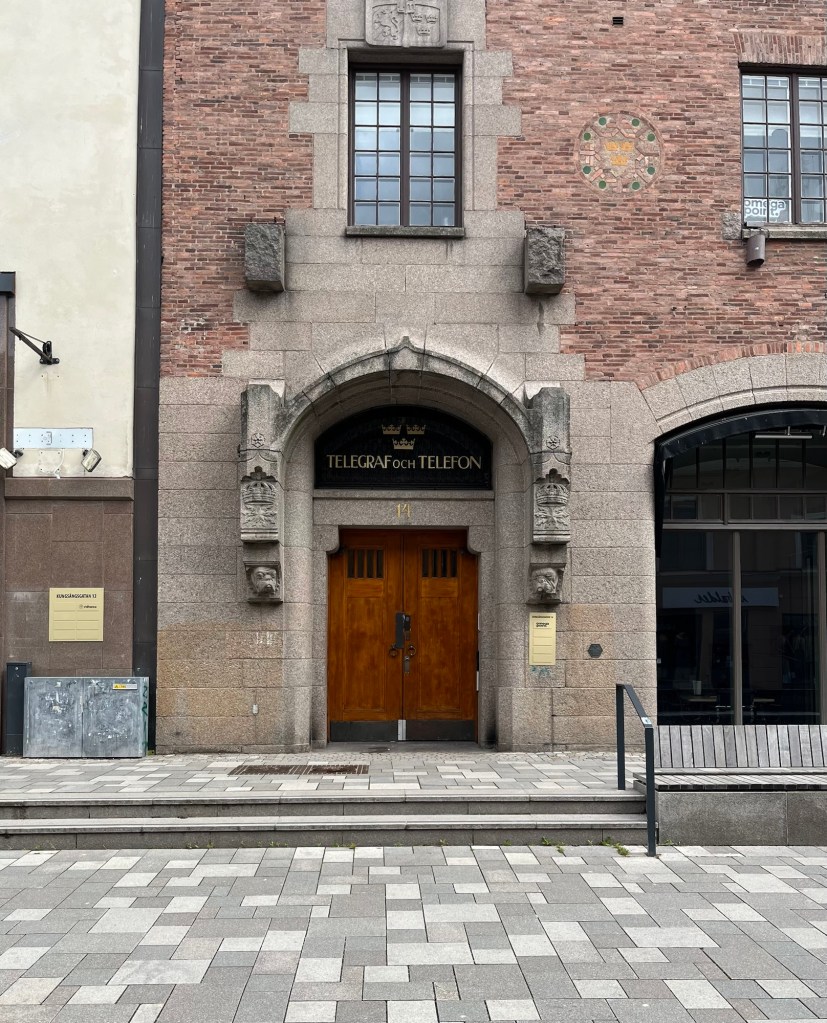
Other things we spotted on our wanderings included this street called after a famous son of the city, a speciality liquorice shop, and the old telegraph and telephone building.
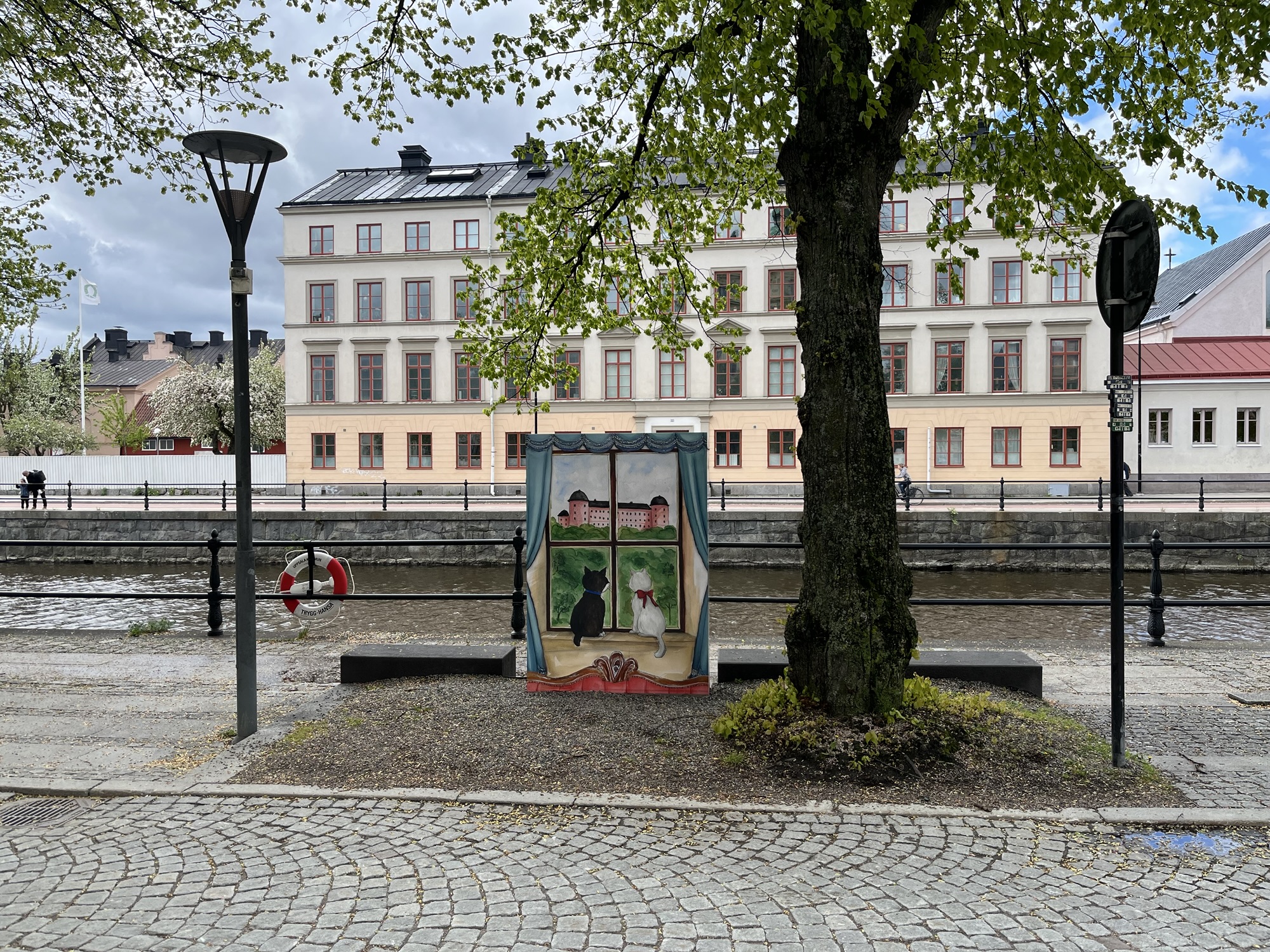
I particularly loved seeing this work of art spotted by the side of the river. It is of Pelle Svanslös, a little tailless cat from a well known series of children’s books (which I do know as my step-son had some of them). The books started life as children’s radio series in 1937 written by Gösta Knuttson, with the series being published between 1939 and 1972. The cat sitting beside him is Maja Gräddnos. The stories are set in Uppsala, hence the connection.
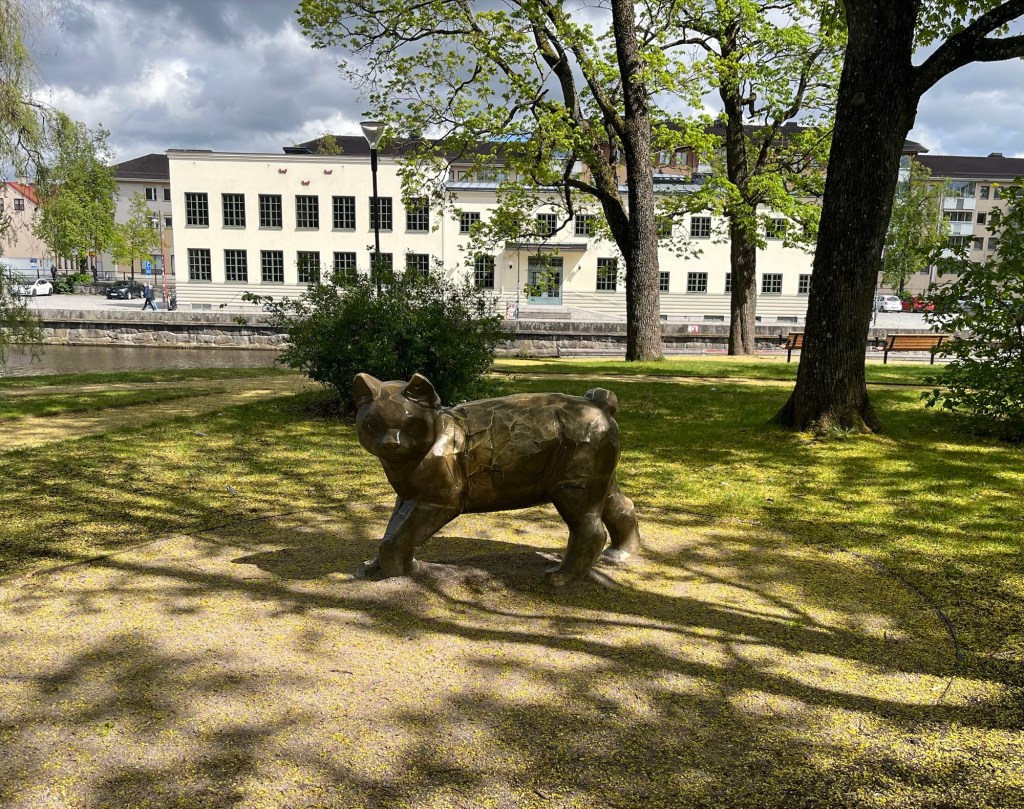
Despite the chilly weather, we took a walk in the gardens. Below you can see the 16th century Uppsala Castle in the background, and a statue of Pelle Svanslös, created by Kristina Jansson in 2012.
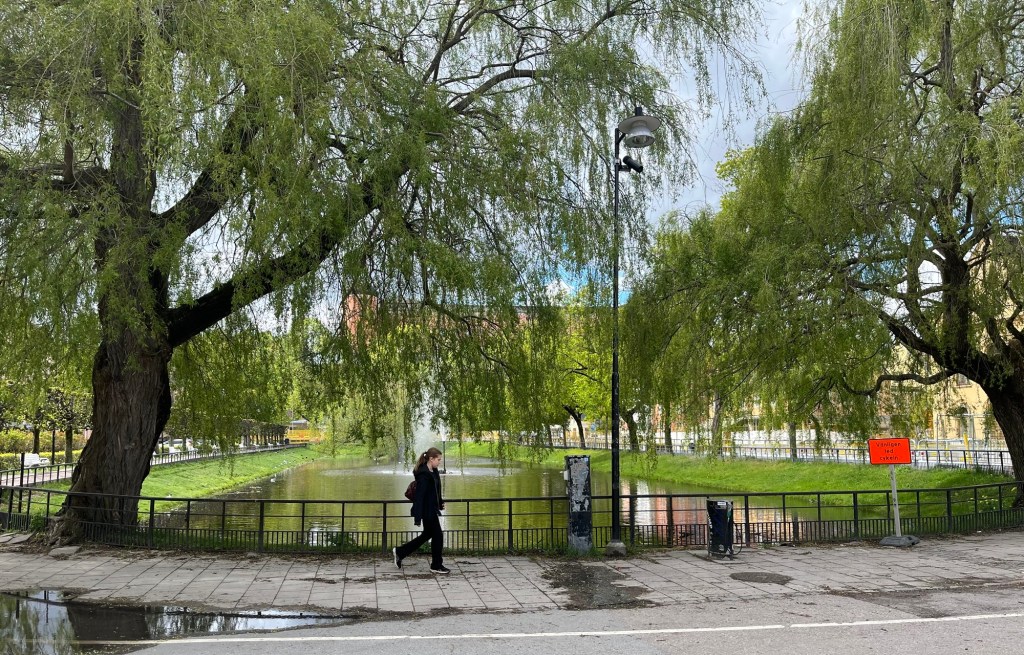
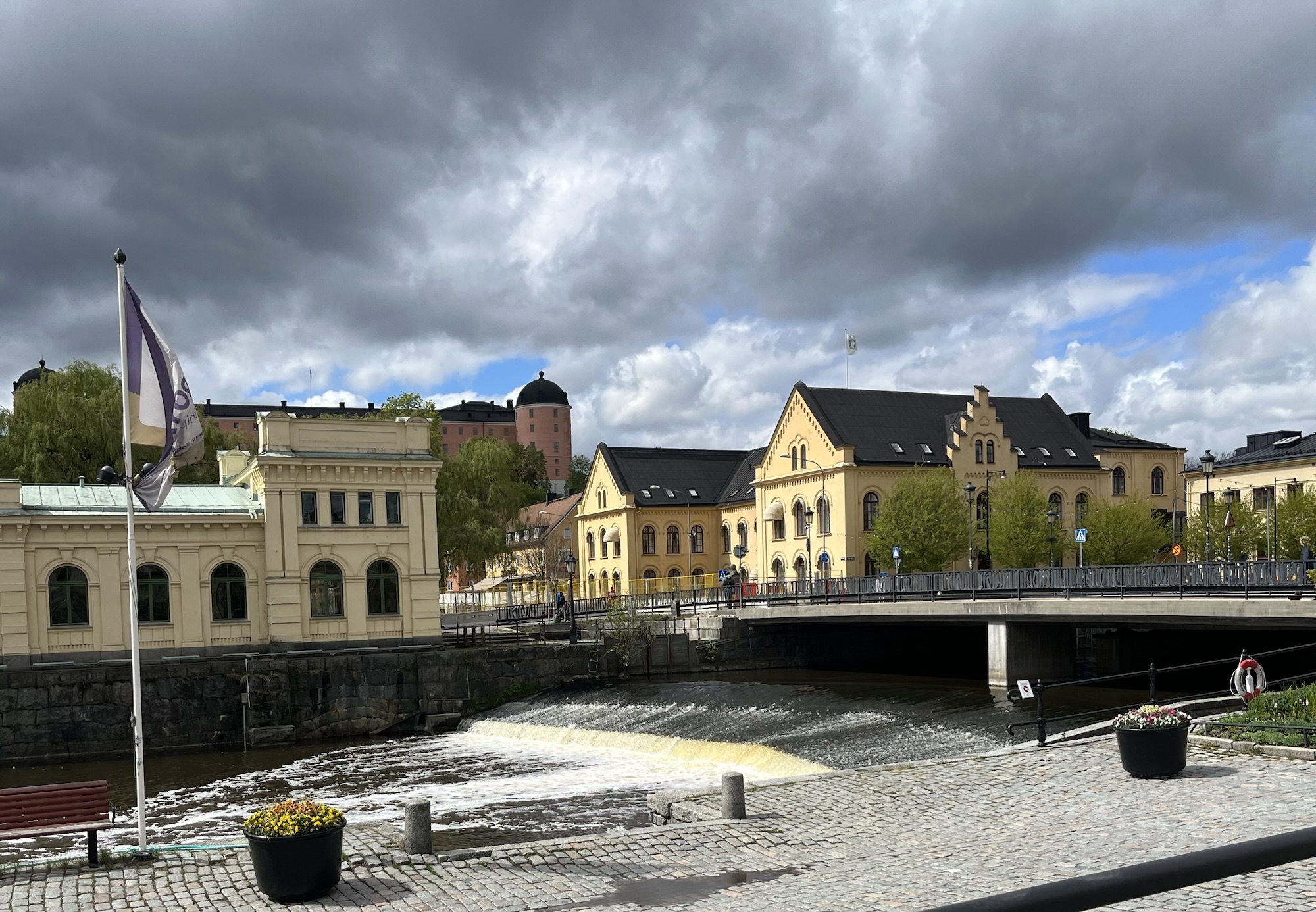
Finally, below is the Fyris river. A river rafting competition organised by engineering and science students is held on this river on Valborg (31 April). I tried to find a clip on YouTube – this was from 2025.
By this time, we were rather cold, so headed back to catch the train back to Stockholm having had a little adventure in Uppsala.
Thistles and Kiwis is a Wellington, New Zealand based blog written by Barbara, who likes cats, summer and good food. Thistles and Kiwis can be found on Facebook and Instagram @thistlesandkiwis


I always enjoy a wander round a town I don’t know, Barbara. Despite the cold! xx
LikeLiked by 1 person
It was so good to visit a new to me at least place.
LikeLiked by 1 person
This has been a delightful visit!
LikeLiked by 1 person
Thank you!
LikeLike
That statue walking is so real looking! Interesting that they took the structural rods and used them artiscally. But the winner for me was the anatomical theatre! The seats are so vertical so everyone could see. I have read about these old early ones but never seen a picture. Thanks!
LikeLiked by 1 person
That statue was very life like. Yes..the steps were very steep in that lecture theatre.
LikeLike
Interesting architecture and sculptures – how good is it to visit somewhere not visited before.
LikeLiked by 1 person
Yes it was a great day out.
LikeLike
Another lovely place with lots of interest.
LikeLiked by 1 person
Yes…such an interesting city.
LikeLiked by 1 person
that museum building is incredible!!
sherry https://sherryspickings.blogspot.com/
LikeLiked by 1 person
Yes! I thought so too.
LikeLike
Uppsala is such a nice place. I have several relatives here. I love taking walks here admiring the old architecture. It sounds like a great time, despite the weather (I like this kind of weather, but I know many people prefer it to be a little warmer). Traveling by train is so convenient. Many people from Uppsala commute to Stockholm for work. I am so happy to see that you’re having a great time!
LikeLiked by 1 person
Yes it was a great day trip to do and see something new – at least for me – Karl has been there of course. There was such a cold wind though! Thanks – we are enjoying ourselves.
LikeLiked by 1 person
It is often windy in Uppsala, it is even described in the history books!
LikeLiked by 1 person
I should be used to wind coming from Scotland and living in Wellington!
LikeLiked by 1 person
Thanks for taking me on another lovely and historic Scandinavan visit. I’m very impressed with the art and architecture!
LikeLiked by 1 person
Glad you enjoyed it!
LikeLike
It all looks so interesting, particularly the Anatomical Theatre since. The statue of the walking woman is eerily realistic. Looks like a wonderful day trip!
LikeLiked by 1 person
The Anatomical Theatre was so interesting to see. The statue gave us both a bit of a start!
LikeLiked by 1 person
You make everywhere you visit seem very interesting. I too thought that the theatre was the highlight.
LikeLiked by 1 person
Thank you! Yes the anatomical theatre was great to see. The whole museum was worth going to.
LikeLike
A wonderful tour of this very interesting town.
LikeLiked by 1 person
Thank you!
LikeLiked by 1 person
What a lovely day out and so easy to travel too. I’m not sure I would have enjoyed the spectacle in the anatomical theatre in days past. It sounds a bit gruesome.
LikeLiked by 1 person
It was such a great day and so much to see too. The anatomical theatre was interesting but not sure about the smells of watching live!
LikeLiked by 1 person
Wow! This isn’t a little town at all! It looks like there is so much to do! Glad you were able to explore despite the chill in the air. I heard from London Aunt that they had a cold snap (and hail) last week.
LikeLiked by 1 person
It was a great trip despite the cold. We seem to be having one day of sunshine, one of grey skies this week.
LikeLike